

002 | Euflora & Celeste Fabros
On creating and building a biophilic design studio rooted in intention and community

"Nature is such a huge part of me, and its presence has always been consistent."
When Celeste told me this while she, Max (her husband), and I were having lunch at a restaurant in their neighborhood called Kai Roa this past fall, I was immediately intrigued to learn more about her business, Euflora. Max had shared posts about Euflora on his Twitter and LinkedIn pages, but I only found out more about the business during this lunch.
Then, around mid-December 2023, as I began to think about this interview series, I thought back about the conversation with Celeste and had to learn more about how she had built Euflora.
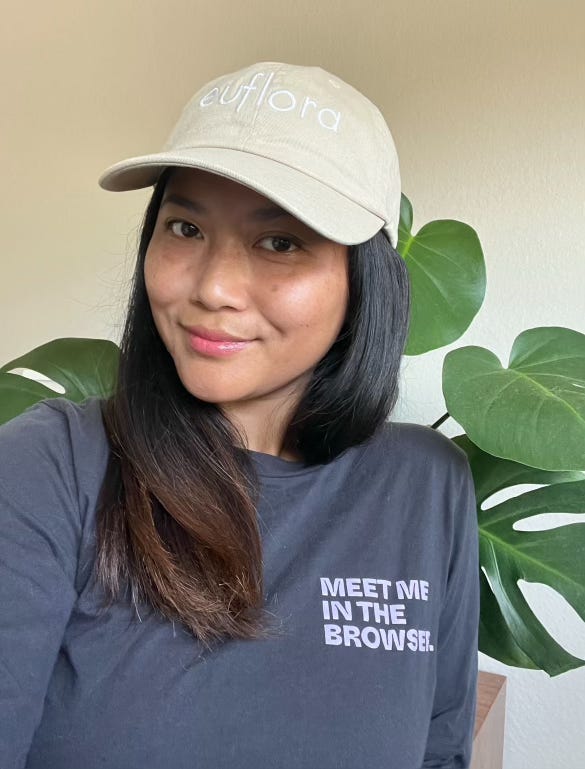
Table of Contents
What is Euflora?
Why is community important to you?
What led you to build Euflora?
How have you created Euflora with a community-driven mindset?
What specific needs Euflora has right now that we can tangibly find ways of helping you solve?
Closing Reflections
Derrick: What is Euflora?
Celeste: Euflora is a biophilic design studio that creates art with plants. We love to use plants, flowers, and local flora as the primary materials for our art.
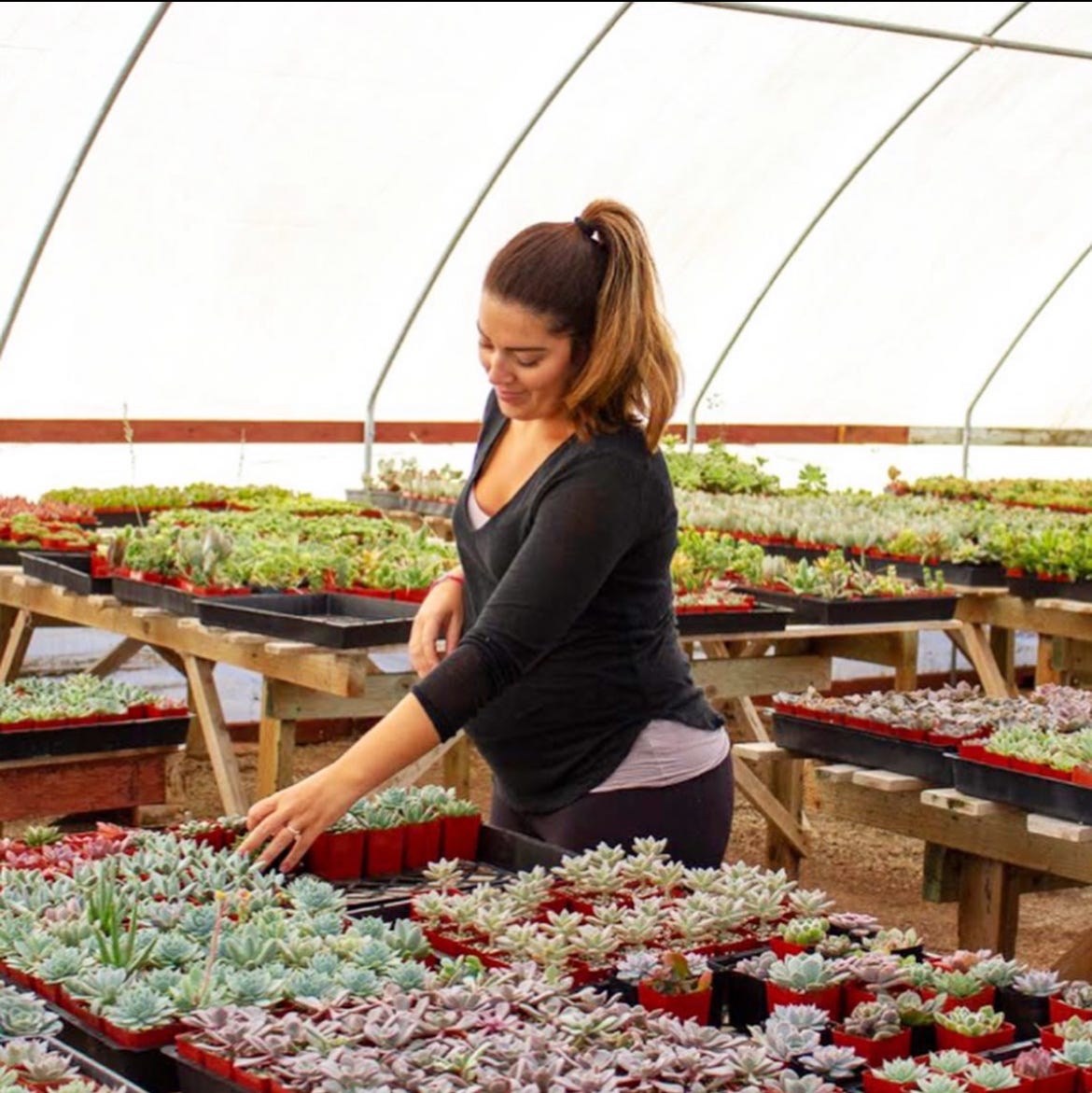
We create direct-to-consumer products (all of which ship nationwide), such as succulent arrangements, which you can think of as living floral arrangements. We know that people will get flowers delivered in the mail, but sadly, they usually die after a week. The succulent arrangements allow us to give a gift that keeps growing.
Another product we have is our Do-It-Yourself Moss kits, which are popular and allow people to create or curate with the materials provided.
We source different types of moss and flowers locally in San Diego, and our headquarters are also in Normal Heights in San Diego.
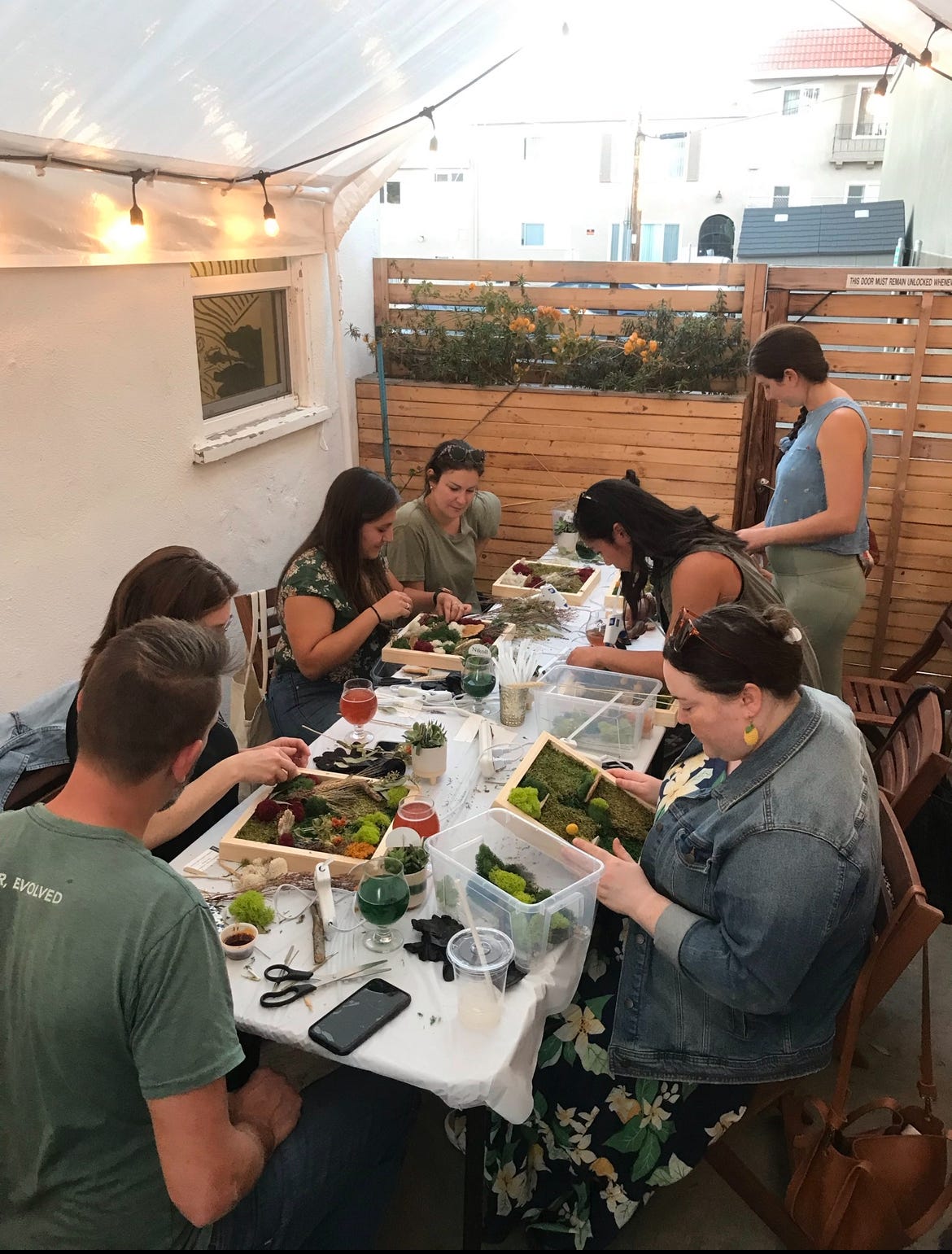
We love these products because they're a way for friends to get together and create while having fun and spending time together. They're also a great way to exercise our creativity. Everyone starts with the same materials, but everyone always comes up with a different rendition — a different kind of piece that is unique to them.
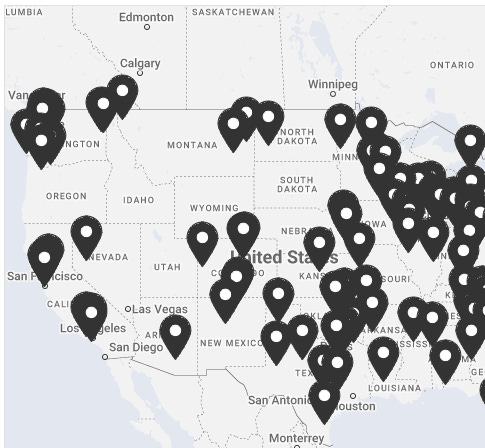
We also offer business-to-business products, which are shipped wholesale to different shops. Our succulents and DIY kits get shipped to shops all over the country.
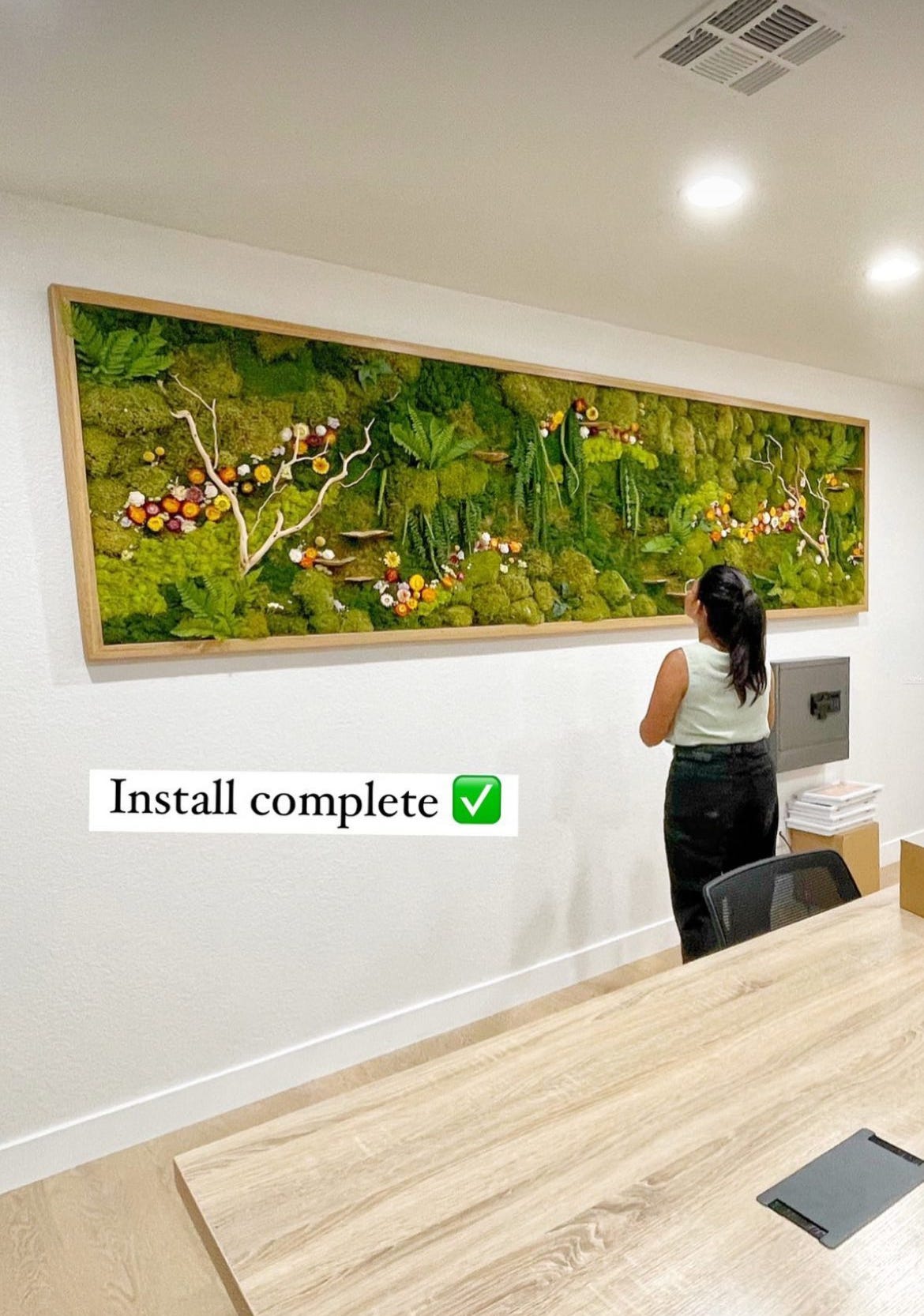
The other B2B product we offer is our large-scale green walls, for example, our 12-foot preserved moss walls or different panels of succulent walls that live outside.


Derrick: Are you only doing these moss and succulent walls in San Diego?
Celeste: I would love to expand at some point. One of my goals for the beginning of the year was to approach different airports and hospitals. We thought about it last year but have yet to get around to fleshing it out. But we think of these pieces as a way to help people center themselves. They're not just beautiful; they are calming in a space. And I was thinking, "What kind of businesses would benefit the most from these walls?" And my first thought was airports and hospitals, which are places that usually have a sterile vibe. I remember going to the Centurion Lounge at SFO and seeing this live green wall there. And I remember thinking, "This is the perfect place for this." It's a way to be in nature even when you're not in nature – that's an essential factor for us.
Derrick: Why is community important to you? At what point did you understand your community's impact on you and your impact on your community? Are there stories, core memories, or events that sparked this feeling of community and its importance for you?
Celeste: I’m an only child and have always been independent. I can entertain myself and have no problem being alone. I love my own company, but I started feeling lonely and wishing to be with my peers and others over time. That sense of community has always been something that was ingrained in me and something that I always craved.
I found community by playing on a sports team or playing doubles tennis.
Overall, I used to have a relatively narrow view of community, but there are lots of different forms and expressions of community. I have created my own brand of it that's natural and authentic to me.
Derrick: What were specific moments in your life where you felt a strong sense of community?
Celeste: In my formative years, it was family. Growing up, my parents were always working, and I was always left alone to do my own thing. Still, I grew up with many friends, cousins, god-brothers, and god-sisters around, so even as an only child, I felt the sibling dynamic through them – they were and still are my community. My parents couldn't be there to entertain and hang out with me, but they trusted the support system around them to be there for me. The cliché is true: raising a child takes a village (or community).
Derrick: What led you to build Euflora?
Celeste: I was very drawn to plants as a child. My dad loved designing our garden, and this activity made us bond. As a family – on the weekends – we would go on hikes, visit a botanical garden, or go to the mountains and experience nature. Nature has always been a massive part of me, and its presence has always been consistent.


I studied political science during college and considered going to law school. We have quite a few lawyers in our family, so my parents believed it to be a tried-and-true career path, similar to how many Filipinos believe nursing to be a tried-and-true career path.
I chose not to go to law school, which didn't go well with my parents, but they got over it eventually. It took me a long time to find my path. But this gave me time to follow my interests and what I was drawn to, which, at the time, involved blogging.
I created a blog about coffee back in the Tumblr days — it was called Java Aficionado. During this time, I made many blogger friends, and at a blogger meetup in Philly (my hometown), I met someone named Melissa, who became my first business partner ever. She approached me and told me she loved my blog and asked, "Who designed it?" I told her I designed it in HTML and WordPress. She said she did the same design, and we decided to take on clients together.


Femme & Fortune
Celeste: From there, we built an online magazine, Femme & Fortune, to empower women to develop their businesses and get into STEM. It was also a space to learn and talk about finance and help each other with our goals.
We presented at Philly Tech Week in 2014 and had a local community of women business owners. I loved it, and it was great for me to transfer some of the digital skills I had cultivated into helping other women find their voice in business.
Coffee
Celeste: Coffee was another subject that I really needed to discuss. And it's funny because coffee is made out of plants (the Euflora connection!). Coffee has always been romantic to me; I study specific species of coffee plants, where they grow geographically, why they produce particular notes at specific elevations and their soil composition.
I worked in coffee for a while, going from a barista to general manager to opening coffee shops for a local roaster in San Diego as one of their first employees.
While working in coffee, I was simultaneously freelancing and eventually met one of my very first clients, Lori.


Lori
Celeste: Lori used to be the Dean of the Art Institute in San Diego. She told me she wanted to open a business and work with plants. I told her I could help with the website and brand photos.
As time passed and I did more freelance digital work, I missed working with my hands. I wanted to have another creative outlet besides my business. So, I contacted Lori and asked if I could buy some materials from her, whether planters or plants, to start making arrangements for friends.
Serendipitously, she told me she was moving out of the country and liquidating the business so I could have anything. I went to her house and was like a kid in a candy store – there were all these different succulents, cacti, and planters. I rented a U-Haul to grab all this stuff to store in a storage unit and in my apartment.
My bedroom and balcony were full of plants, and I would make random arrangements here and there. I had so much fun creating! These were the early days of Euflora – just me messing with arrangements at home.
Lindsay
Celeste: At some point, my buddy, Joe, my coworker at the coffee shop I worked at before, told me he knew a guy he played rugby with whose wife, Lindsay, had a succulent business called Sweet Digs. At first, I wasn't ready to reach out, but after about a year, I finally did. When she told me her story about the business, I related to so much of it, mainly because she left Corporate America to pursue entrepreneurship. She also needed help moving more of her business online, so I helped with website design and digitizing operations.
I worked under her for a couple of years and learned about the business behind the scenes. Eventually, she moved to Arizona and asked if I wanted to buy Sweet Digs from her. This led me to Clarisse and how she became involved in Euflora.
Clarisse
Celeste: I met Clarisse, my now business partner and close friend, through a mutual connection back when I lived in Philly. She was one of my first friends IRL in San Diego when I moved.
With my newly formed hobby of creating succulent arrangements, I made an Instagram page called Euflora because I just wanted a place to share my creations. I wasn't trying to sell anything; it was all for fun.
I told her about Euflora; she thought it was a fantastic idea. She's also a graphic designer, and for one of my birthdays, she made stamps and stickers of the logo I made and gave them to me as a gift – the best gift ever!
During this time, I have been running Sweet Digs independently since Lindsay left, and it is becoming difficult. Then, it dawned on me that Clarisse would be a perfect fit as a partner in the business. We shared similar skills and values, but she's brilliant and unique. I pitched the idea of her joining – with a 12-page business plan – to her and her then-boyfriend. They said yes, and we bought the business from Lindsay. We acquired Sweet Digs and made it our own. We officially changed the name to Euflora, changed the look & feel, and eventually the business models. The rest was history, and Euflora formally became a business.
She's the best. I couldn't have asked for a better partner to do this with. She's absolutely essential to everything that is Euflora.


Derrick: How have you created Euflora with a community-driven mindset?
Celeste: As I've thought about Euflora's story, it feels like a series of happy accidents.
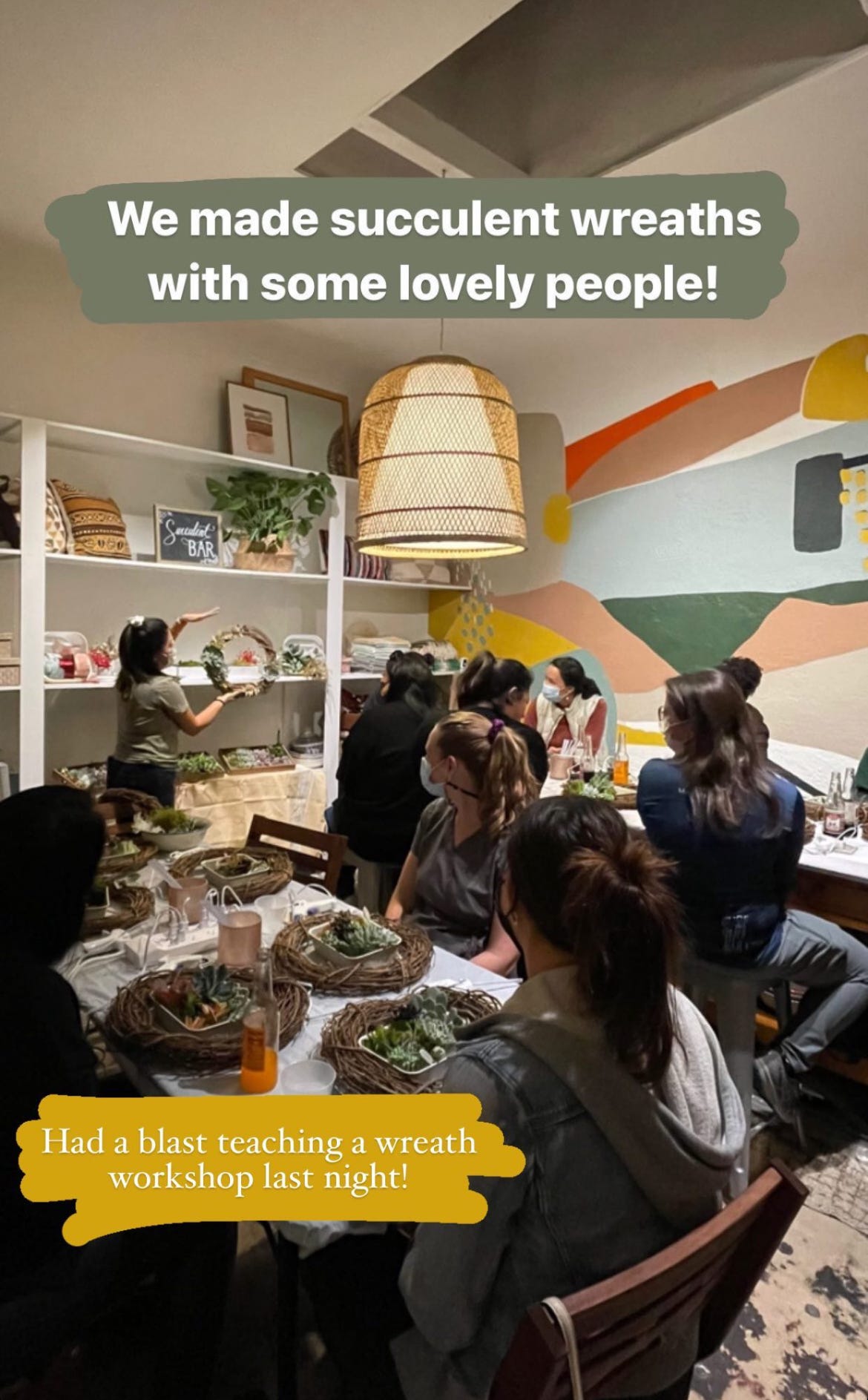
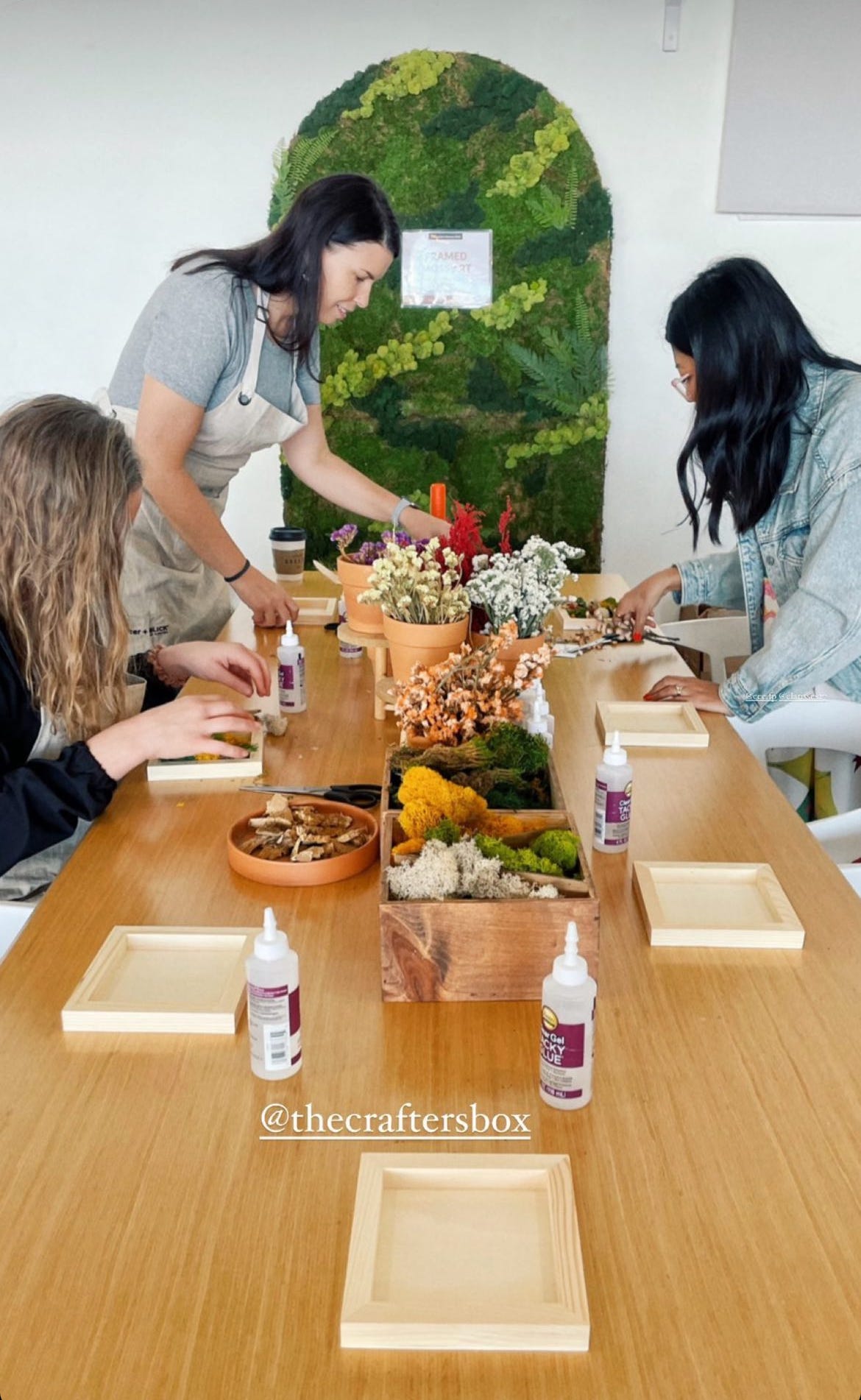
The name "Euflora" is actually a combination of "You" and "Flora ."Since this is the name, it always reminds me of our relationship with nature. This naturally also reminds me to always continue engaging with the community. One of the ways we do this is by hosting workshops. Our DIY kits were born from the idea that people out there want to create but need access to the necessary resources or our workshops in San Diego. The workshops are a fun way to meet new people in our community and collaborate with other local businesses.
We do a lot of collaborations. For example, we did a two-part workshop with Mud Lily, a fabulous local and woman-owned pottery studio. We also donate our time to organizations like UPAC; they help people in underserved communities with a focus on mental health services, addiction, treatment, and rehab services for all ages.
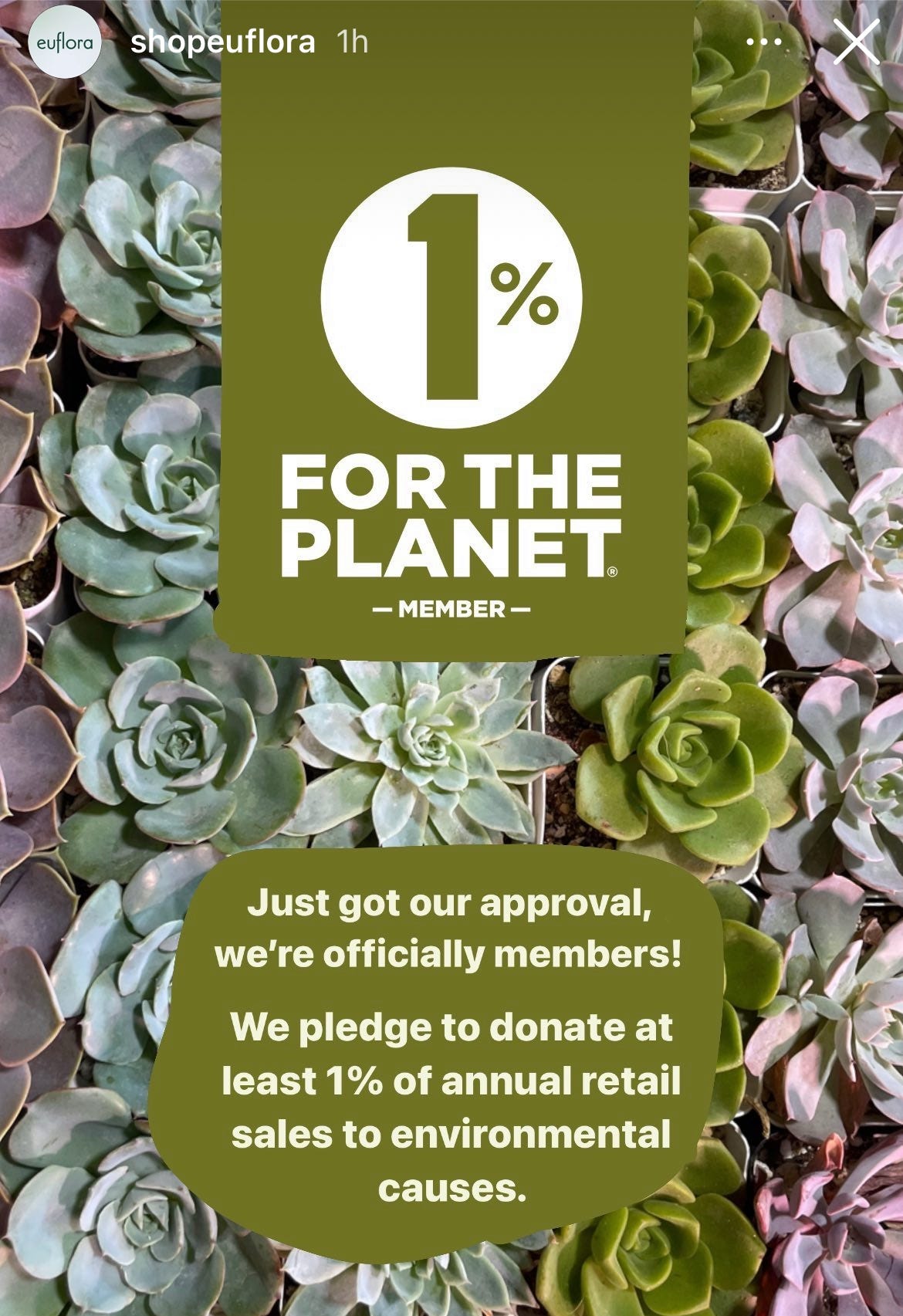
Clarisse and I understand how fortunate we are to be in the position that we're in. We want to represent Filipino people/Filipino communities, Asian-American communities, women-owned businesses, and BIPOC-led businesses – we want to be an example of how we can do business and give back to the community. We try to give back in multiple ways, whether it's donating our time, having our product be available for shipment to (as far as) Alaska and Hawaii, volunteering at Creative Mornings, and being members of 1% for the Planet.
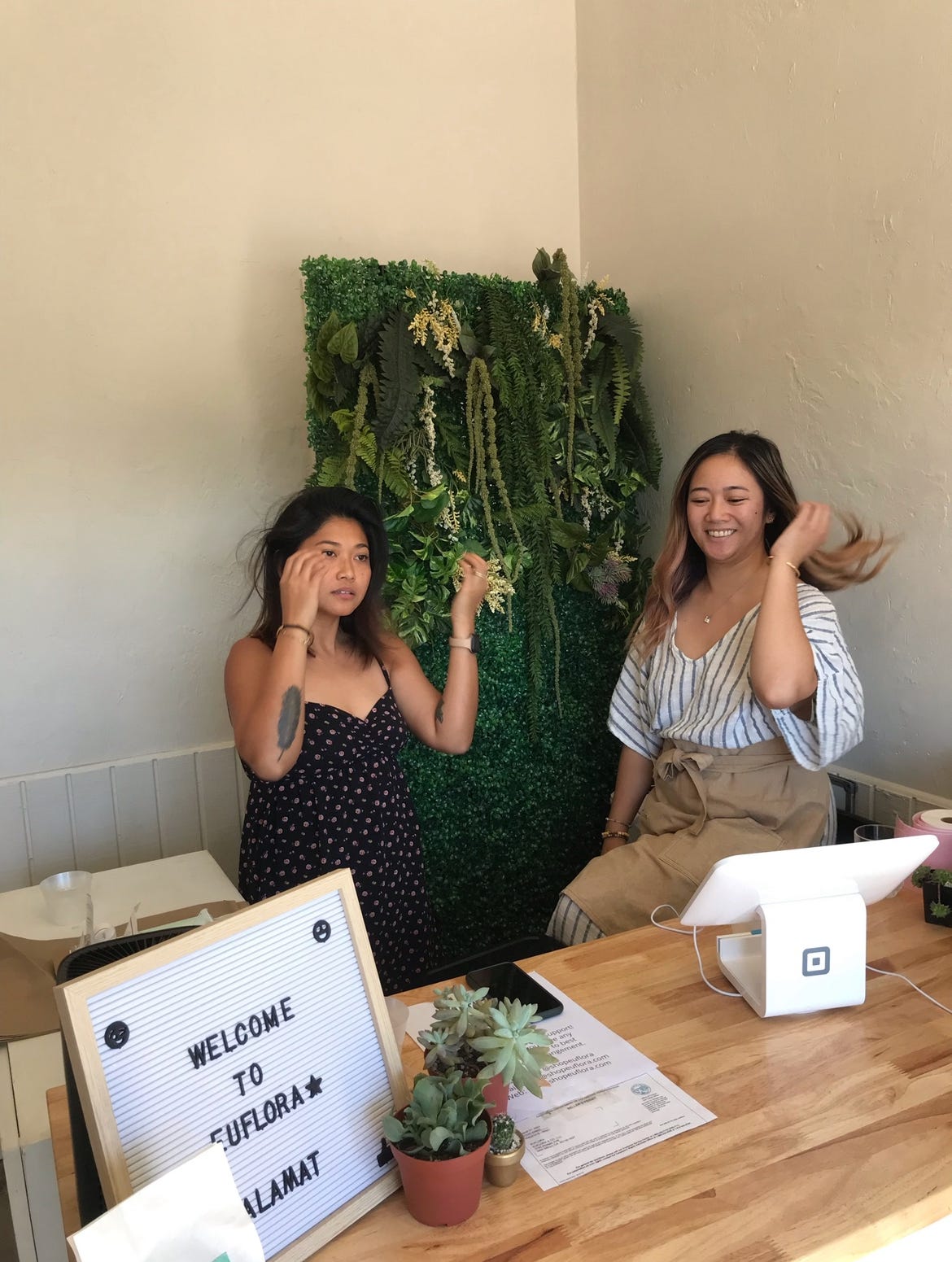
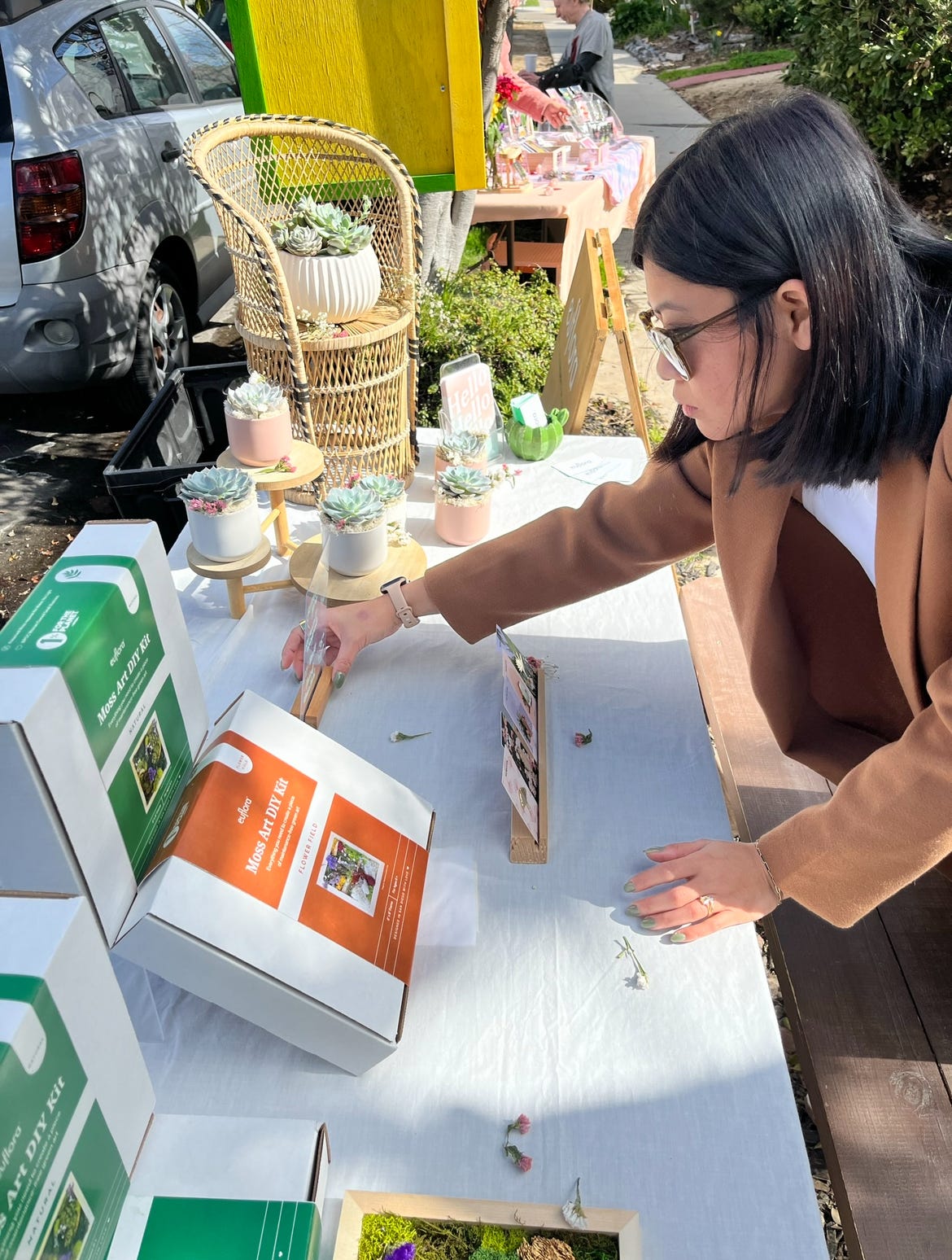
Hoping to hire employees at some point
Celeste: I hope we get to a point where we can be proper employers who pay fair wages and offer equity and good benefits to people in our community — to be a source of livelihood for someone outside of ourselves. This is one of my main goals. On top of that, having sound business practices and not sacrificing the nature conservancy aspect of what we do.
Creative Mornings & 1% for the Planet
Celeste: We believe everyone is creative. It's easy to say, "I'm not creative because I don't work in the arts or design." But creativity has many expressions. Strategy is creative, problem-solving is creative, data analysis is creative.
This led us to attend and volunteer at Creative Mornings — a global breakfast luncheon in most major cities. Their manifesto states that everyone is creative. I highly recommend their community, wherever you're listening from. The community is full of interesting people and organizations with amazing causes. If you're in San Diego and come to one of the events, you'll probably find me volunteering in the coffee section (coincidence, right?) – come talk to me!
Dedicating time to organizations like these and 1% for the Planet for Nature Conservancy, which have similar values to us, helps provide a compass for how we build the business now and in the future.


Derrick: What specific needs Euflora has right now that we can tangibly find ways of helping you solve?
Celeste: We definitely want to be out in our community more. Sometimes, we just need more bandwidth to do proper outreach. Whether you have a local business or not, we're constantly exploring different ways to collaborate, even with people who are not local. I would love to get some fresh ideas. There's strength in numbers when more minds are working on the same goal. If you're listening as a consumer and you're curious about Euflora, please give us a follow. We have more of a presence out there that is comfortable and true to us.
On the tactical side, one of the challenges we've had from the end of last year to now is production power. It's really just Clarisse and myself. Whenever we're really strapped, we hire people to help us out. But we're in a growth phase right now, where I really want to scale, and I want to do so much more, but we're limited because we're working on the business and in the business at the same time. In the future, I would love to scale our products and make them available to more people.
I'm still figuring out what this looks like: is it digitizing? Is it systematizing? Is it more manpower/womanpower? These challenges are top of mind for us and what we're tackling now.
Derrick: Closing Reflections
Thank you so much for sharing more about how you built Euflora with community, intention, and creativity, Celeste!
You understand who you are; Clarisse understands who she is. You understand what you're passionate about. You know your role and impact in a community, and it's transparent with everything that you just shared with us about how that manifests and is expressed in the business.
Selfishly, I hope more businesses think about building the way you have made Euflora when it comes to being centered around community.
If you want to learn more about Euflora, here are all the places you can find them:
this is a terrific series D - I'm getting a lot of inspiration from stories like chris, clarisse and celeste building businesses that are close to their values. keep em coming!